- Human inspectors catch only 80% of defects - AI achieves 99.7% accuracy consistently
- Computer vision inspects 500+ units per minute and detects defects as small as 0.01mm
- ROI on computer vision quality inspection pays back within 8-12 months
- Combining CV with predictive maintenance and supply chain AI delivers full Industry 4.0 transformation
AI-powered computer vision systems are revolutionizing quality control in manufacturing, detecting microscopic defects at speeds impossible for human inspectors.
The Quality Control Challenge in Modern Manufacturing
Manual quality inspection is slow, inconsistent, and expensive. Human inspectors catch only 80% of defects on average, and fatigue reduces accuracy further during long shifts. In high-precision industries like electronics, automotive, and medical devices, even a 1% escape rate can translate to millions in warranty claims, recalls, and brand damage. This is where Computer Vision Quality Inspection delivers transformative value.
The global manufacturing quality inspection market is projected to reach $12.5 billion by 2027, driven largely by adoption of AI-powered visual inspection systems. Companies that implement AI Defect Detection are not just improving quality - they are fundamentally changing the economics of production.
How Computer Vision Quality Inspection Works
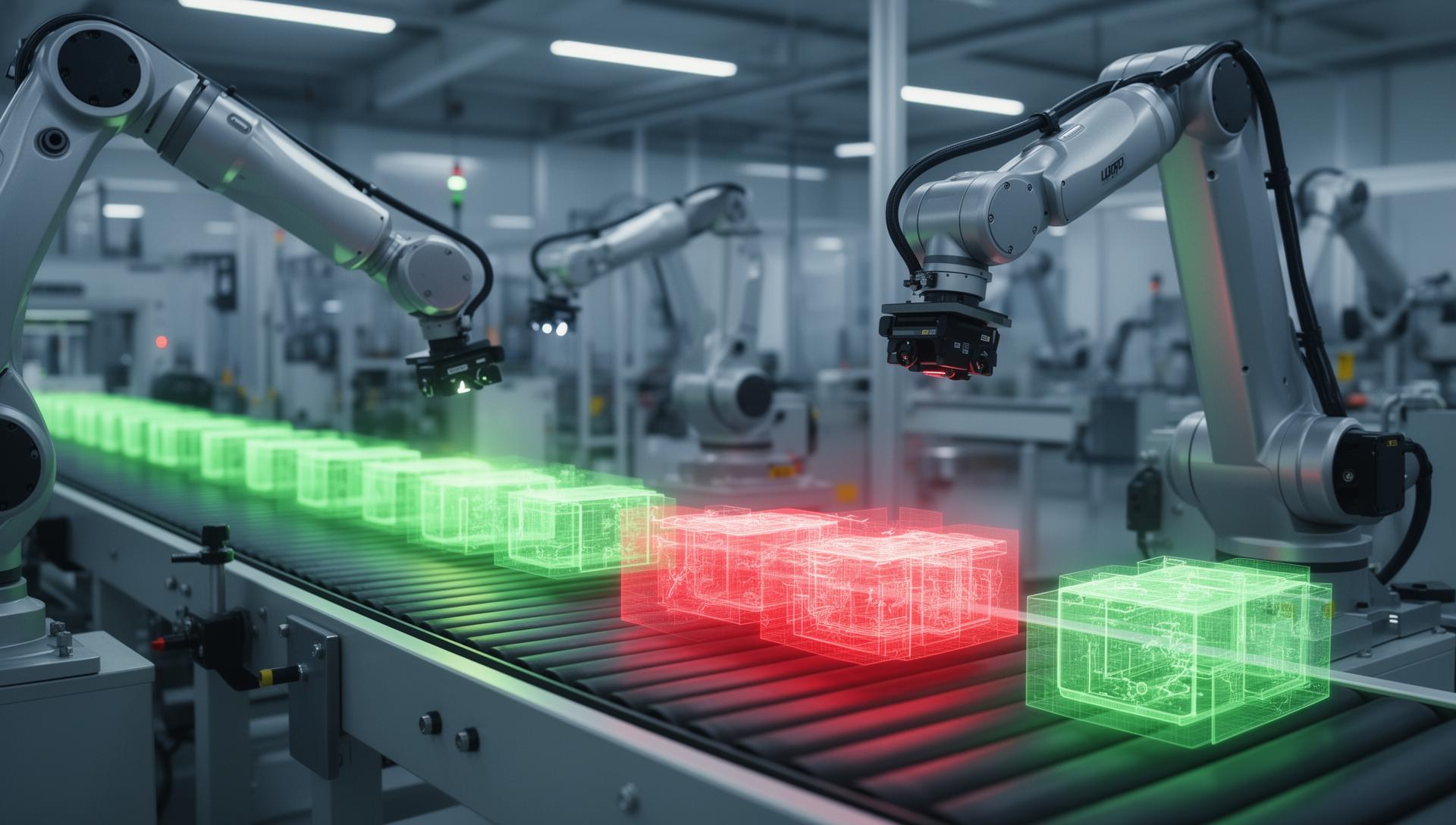
Computer Vision Quality Inspection uses deep learning models - specifically convolutional neural networks (CNNs) - trained on thousands of images of both defective and non-defective products. Unlike rule-based machine vision systems that require explicit programming for each defect type, AI-powered systems learn to identify defects from examples, making them far more adaptable and accurate.
These AI models can:
- Inspect products at speeds of 500+ units per minute, far exceeding any human capability
- Detect defects as small as 0.01mm - invisible to the naked eye even with magnification
- Maintain 99.7% accuracy regardless of shift length, lighting variations, or operator fatigue
- Classify defect types and root causes automatically, enabling closed-loop quality improvement
- Continuously improve through active learning as they encounter new defect patterns
Types of Defects AI Can Detect
AI Defect Detection systems excel at identifying a wide range of manufacturing defects:
- Surface defects - scratches, dents, stains, discoloration, and surface roughness variations
- Dimensional defects - parts that are out of tolerance, warped, or misaligned
- Assembly defects - missing components, incorrect orientation, or improper seating
- Material defects - porosity, inclusions, cracks, and delamination
- Cosmetic defects - color inconsistencies, print quality issues, and label misalignment
Implementation Architecture: Building a Production-Grade System
A typical AI Defect Detection system consists of four interconnected layers:
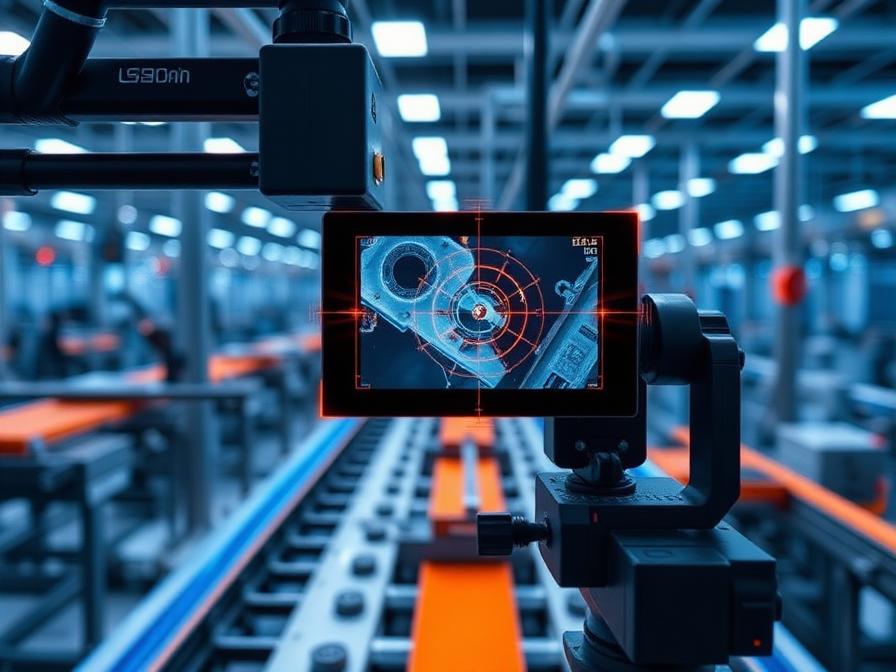
- High-resolution cameras - positioned at critical inspection points along the production line. Depending on the application, these may include area scan cameras, line scan cameras, or 3D structured light systems. Camera selection depends on the product geometry, line speed, and defect types being targeted.
- Edge computing devices - running optimized inference models for real-time processing. Modern edge AI accelerators can process 30+ frames per second, enabling inline inspection without slowing production. Models are typically compressed using techniques like quantization and pruning to achieve the necessary inference speed.
- Cloud-based training pipeline - that continuously improves the model as new defect examples are collected. This creates a virtuous cycle: the more the system inspects, the better it becomes. Automated retraining pipelines ensure the model stays current with new product variants and emerging defect patterns.
- Integration with MES/ERP - systems for automated rejection, sorting, and reporting. When a defect is detected, the system can automatically reject the part, trigger an alarm, adjust upstream process parameters, or route the part for rework - all without human intervention.
Case Study: Electronics Manufacturer Achieves 99.4% Detection Rate
An electronics manufacturer producing multilayer printed circuit boards (PCBs) implemented NeoBram's Computer Vision Quality Inspection solution across three production lines. PCB inspection is particularly challenging because defects can be extremely subtle: hairline cracks in solder joints, micro-bridges between traces, and void formations that are invisible under normal lighting.
The implementation included:
- 12 high-resolution cameras - with specialized lighting (bright field, dark field, and UV fluorescence)
- Custom-trained deep learning models - for each defect category, trained on 50,000+ annotated images
- Edge inference servers - delivering sub-100ms detection latency
- Real-time quality dashboards - with defect heat maps and trend analysis
Results after 6 months:
- Defect detection rate - improved from 82% to 99.4%, virtually eliminating defect escapes to customers
- False rejection rate - decreased by 75%, recovering thousands of good parts that were previously being scrapped
- Inspection throughput - increased 10x compared to manual inspection stations
- Annual savings - of $2.8M from reduced warranty claims, rework, and customer returns
- Customer quality complaints - dropped by 90%, strengthening key account relationships
"The AI catches defects our best inspectors miss, and it does it 10 times faster. But the real value is in the data - we now understand exactly which defects are most common and can trace them back to specific process parameters." - Quality Director, Electronics Manufacturer
The ROI of Computer Vision Quality Inspection
For manufacturing leaders evaluating Computer Vision Quality Inspection, the financial case is compelling:
- Direct cost savings: Reduced scrap from lower false rejection rates, fewer warranty claims from improved detection, and elimination of manual inspection labor costs
- Productivity gains: Faster inspection enables higher line speeds and eliminates the quality bottleneck in production
- Customer retention: Consistent, near-perfect quality strengthens relationships with demanding OEM customers and reduces the risk of costly recalls
- Data-driven improvement: AI inspection generates rich defect data that enables root cause analysis and upstream process optimization
The typical ROI timeline for Computer Vision Quality Inspection is 8-12 months, with ongoing annual savings of 15-30% of total quality costs.
Advanced Techniques: Beyond Basic Defect Detection
The frontier of Manufacturing AI Solutions in quality inspection is moving rapidly:
- Generative AI for synthetic training data - When real defect images are scarce (e.g., for new products), generative models create realistic synthetic defect images to bootstrap the training process
- Anomaly detection for unknown defects - Unsupervised learning models detect any deviation from normal, catching defect types the system has never seen before
- Multi-spectral and hyperspectral imaging - AI analyzes images across wavelengths invisible to the human eye, detecting subsurface defects and material composition variations
- 3D inspection with point cloud analysis - For complex geometries, AI analyzes 3D point cloud data to verify dimensional accuracy and surface profiles
Manufacturing AI Solutions: Beyond Inspection
Computer Vision Quality Inspection is just one component of comprehensive Manufacturing AI Solutions. When combined with predictive maintenance, supply chain optimization, and production scheduling AI, manufacturers achieve true Industry 4.0 transformation. The quality data generated by vision systems feeds into predictive models that optimize upstream processes, creating a closed-loop system that continuously improves overall manufacturing performance.
Getting Started: A Practical Roadmap
- Select your pilot line - Choose the product line with the highest defect rate or the most quality-sensitive customer
- Audit current inspection - Document existing defect types, detection rates, and false rejection rates to establish a baseline
- Collect training data - Gather 1,000-5,000 images of each defect type under production lighting conditions
- Deploy and validate - Install cameras, train models, and run the AI alongside existing inspection for 30 days to validate accuracy
- Scale and optimize - Expand to additional lines, integrate with MES, and implement closed-loop process control
The ROI on Computer Vision Quality Inspection typically pays back within 8-12 months. Start with your highest-defect-rate product line and expand from there.
Written by
Karthick RajuChief of AI at NeoBram. Helps enterprises move from AI experimentation to production-grade deployment across manufacturing, BFSI, pharma, and energy.
Connect on LinkedIn