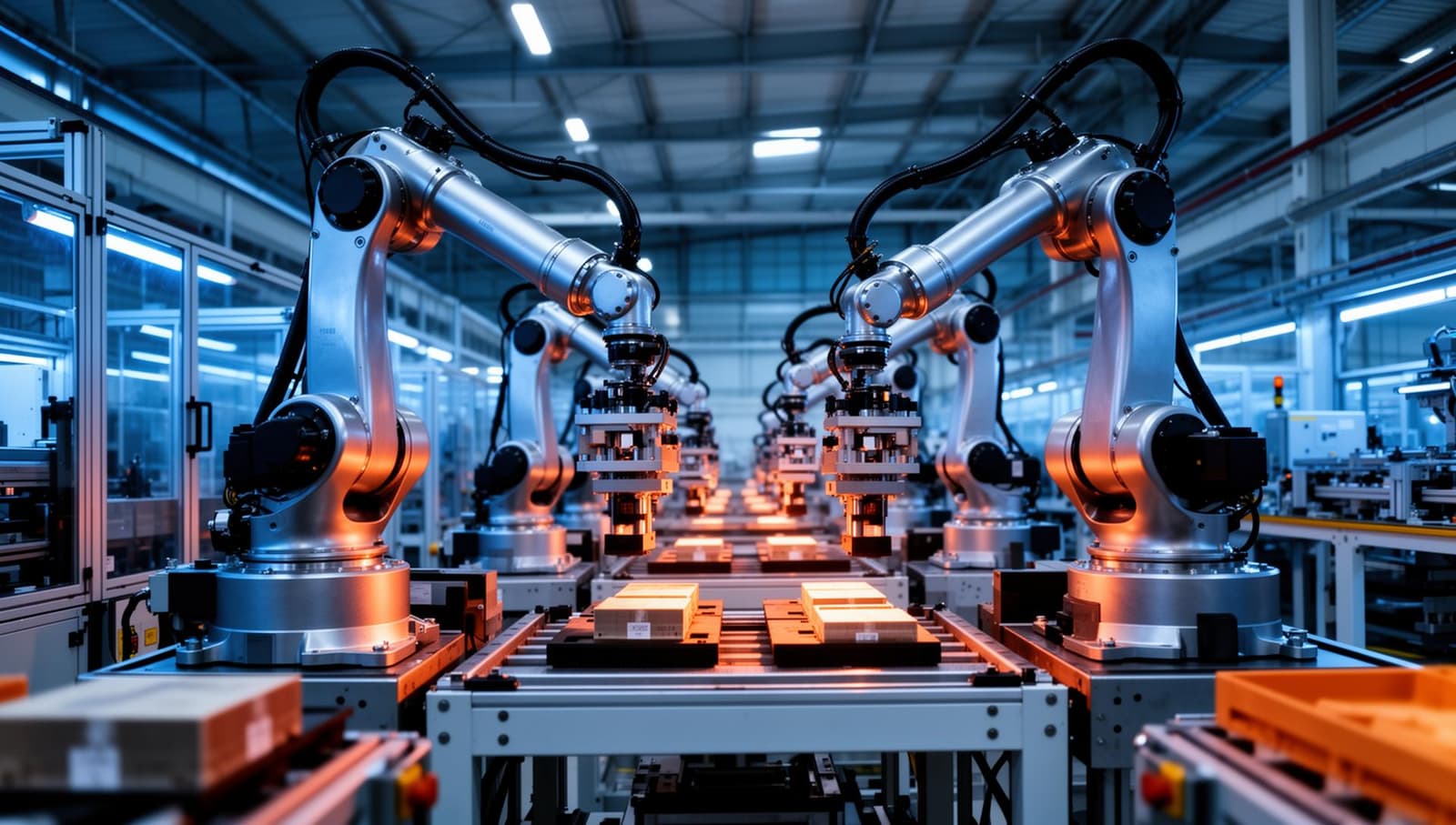
Computer Vision Solutions
for Manufacturing
AI-powered visual intelligence for safety, quality, and compliance - across manufacturing, oil & gas, pharma, and water treatment.
The Opportunity
Your Cameras Are Already Watching. Now Make Them Intelligent.
The computer vision market is projected to reach $39 billion by 2029, growing at 19.8% CAGR. Companies using AI vision have seen up to 90% reduction in manual monitoring and 87% fewer safety violations. With 28% of manufacturers planning to adopt vision systems this year, the leaders are already ahead - and the gap is widening.
Use Cases
10 Proven Computer Vision Use Cases for Industrial Operations
Ensure every worker is protected - every shift, every zone
PPE Detection & Safety Compliance

The Business Problem
Manual safety audits catch violations hours or days after they happen. Supervisors can't monitor every worker across every shift. A single missing helmet or pair of safety boots in the wrong zone can lead to serious injuries, regulatory fines, and production shutdowns.
How Vision AI Solves It
AI-powered cameras continuously scan every worker entering the floor - detecting helmets, safety boots, gloves, goggles, hi-vis vests, and harnesses in real-time. Non-compliance triggers instant alerts to supervisors and can block access to hazardous zones until proper gear is worn.
Business Outcomes
- 90% reduction in manual compliance monitoring effort
- 87% fewer safety violations within 6 months
- Instant alerts - violations caught in seconds, not hours
- Full audit trail for regulatory compliance (OSHA, ISO 45001)
Draw the line - and enforce it automatically
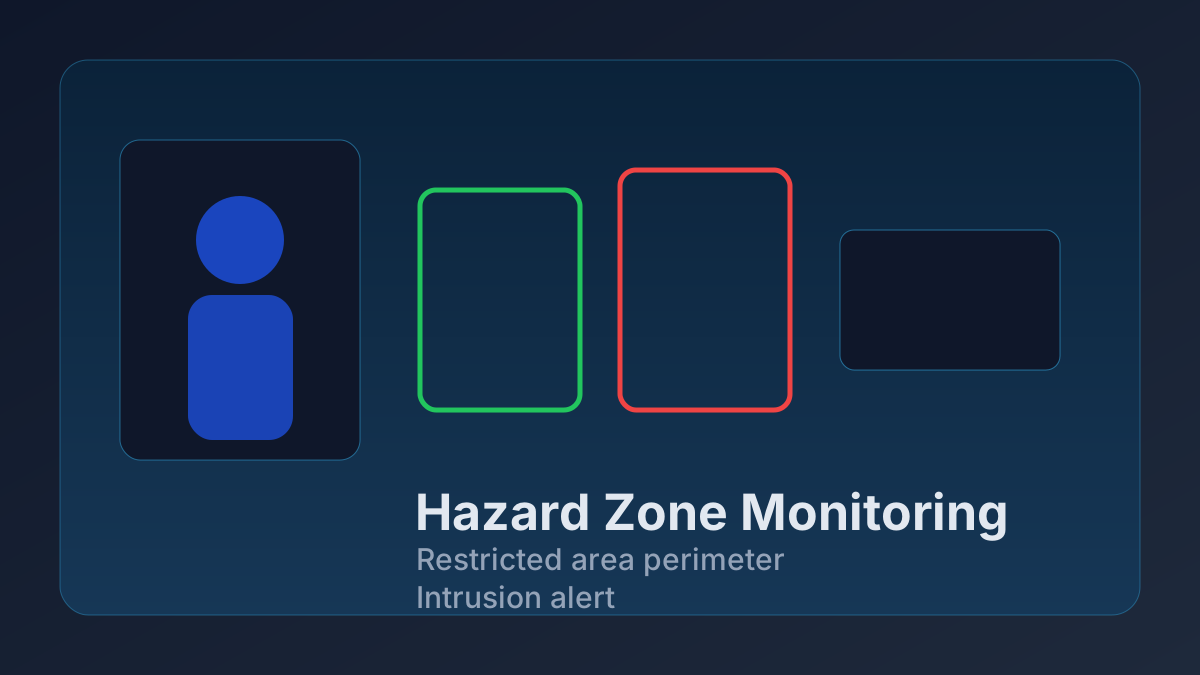
Hazard Zone Monitoring & Restricted Area Access
The Business Problem
Restricted zones around heavy machinery, chemical storage, or high-voltage areas rely on signage and manual supervision. Workers inadvertently enter danger zones, especially during shift changes or emergencies. Traditional badge-based access control doesn't prevent tailgating or detect lingering.
How Vision AI Solves It
Define virtual perimeters around any hazardous area using your existing CCTV cameras. The AI detects when anyone enters a restricted zone - authorized or not - and triggers real-time alarms, automated announcements, or even machine shutdowns. No additional hardware needed beyond your existing cameras.
Business Outcomes
- 100% real-time coverage of all restricted zones
- 70% reduction in unauthorized zone entries
- Automatic machine stop when workers enter danger areas
- Zero blind spots - works with existing CCTV infrastructure
Catch every defect - at production speed
Real-Time Defect Detection & Quality Inspection

The Business Problem
Human inspectors catch about 80% of defects on a good day. They get tired, they miss subtle flaws, and they can't keep up with high-speed lines. Every defect that ships means warranty claims, rework costs, and damaged customer trust. In pharma, a missed defect can mean a product recall.
How Vision AI Solves It
High-resolution cameras powered by deep learning inspect every single product at full line speed. The system spots scratches, micro-cracks, dimensional errors, colour mismatches, contamination, and surface defects invisible to the human eye - consistently, 24/7, without fatigue.
Business Outcomes
- 99.4% defect detection accuracy
- 10x faster inspection than manual processes
- 60% reduction in warranty claims and rework
- ROI within 6 months of deployment
Detect danger before alarms even trigger
Fire, Smoke & Gas Leak Detection

The Business Problem
Traditional smoke detectors and gas sensors have limited range and slow response times. In large facilities - refineries, chemical plants, treatment facilities - a fire or gas leak can escalate to catastrophe in minutes. By the time point sensors detect smoke, the situation may already be critical.
How Vision AI Solves It
Computer vision analyses live video feeds to detect the earliest visual signs of fire, smoke plumes, or vapor clouds - often 30-60 seconds before traditional sensors trigger. The AI distinguishes between real threats and false alarms (steam, dust) with 98%+ accuracy, enabling faster evacuation and suppression.
Business Outcomes
- 30-60 second faster detection than traditional sensors
- 98.4% fire detection accuracy with minimal false alarms
- Covers massive areas with a single camera vs. hundreds of point sensors
- Integrated with emergency response and suppression systems
See wear and failure before it costs you
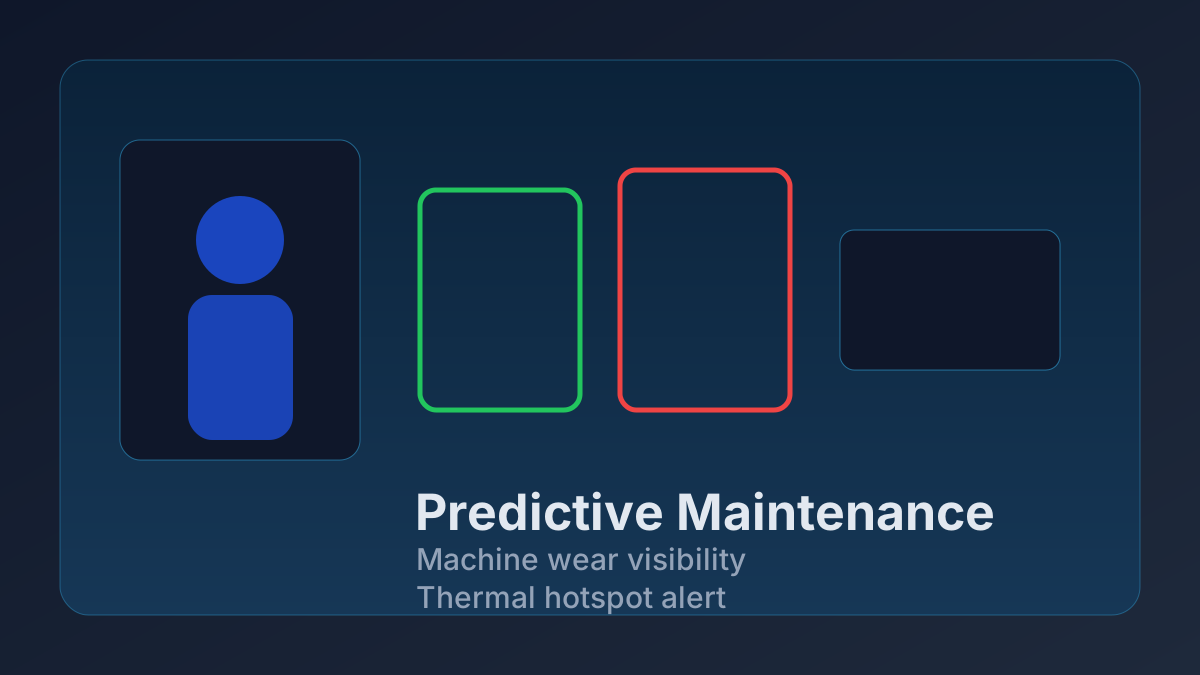
Predictive Maintenance via Visual Inspection
The Business Problem
Equipment failures cost manufacturers an average of $260,000 per hour. Traditional vibration and temperature sensors only cover specific failure modes. Visual signs of degradation - corrosion, cracks, belt wear, fluid leaks, discolouration - go unnoticed until it's too late.
How Vision AI Solves It
AI analyses visual feeds from standard and thermal cameras to detect early signs of equipment degradation: corrosion patterns, surface cracks, misalignment, overheating components, oil seepage, and belt wear. Maintenance teams get alerts days or weeks before failure, enabling planned repairs during scheduled downtime.
Business Outcomes
- 35-45% reduction in unplanned downtime
- 25% lower maintenance costs overall
- Early detection of corrosion, leaks, and thermal anomalies
- Works alongside existing sensor-based predictive maintenance
Protect your people from invisible risks
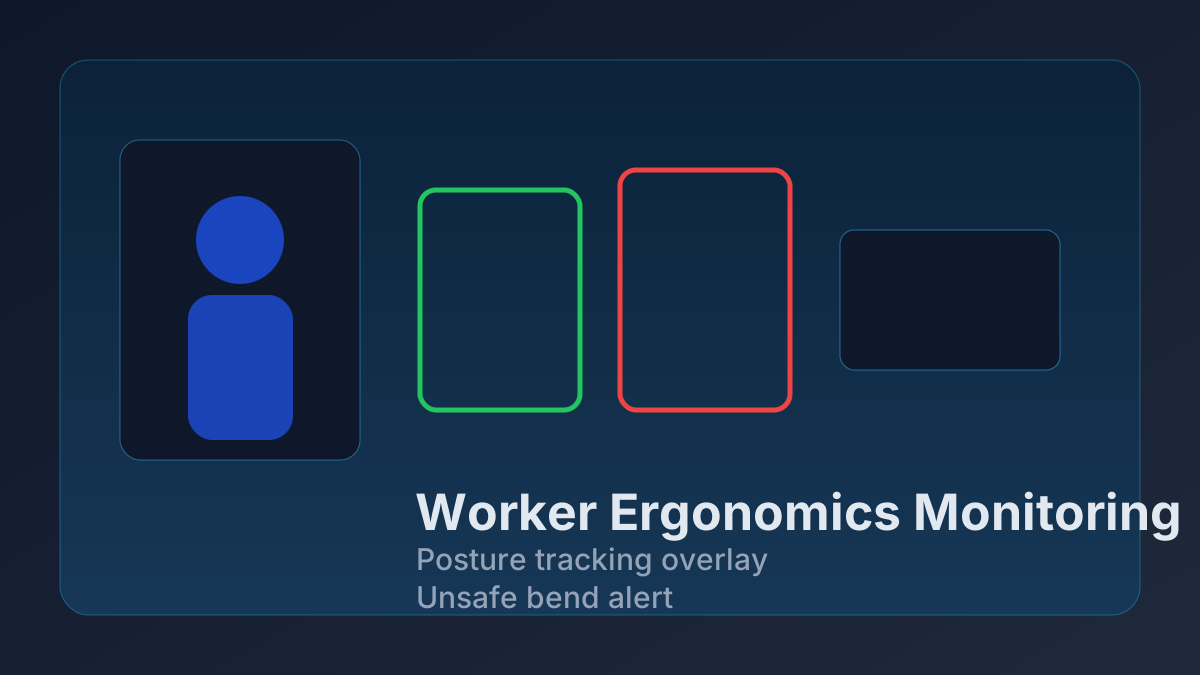
Worker Behavior & Ergonomics Monitoring
The Business Problem
Musculoskeletal injuries account for 33% of all workplace injuries in manufacturing. Unsafe lifting, repetitive strain, and fatigue go unnoticed until workers file injury claims. Traditional ergonomic assessments are periodic, subjective, and miss real-time risk patterns.
How Vision AI Solves It
Pose estimation AI analyses worker movements in real-time to identify unsafe postures, improper lifting techniques, repetitive strain patterns, and signs of fatigue. The system generates coaching alerts and provides data-driven ergonomic insights to redesign workstations and processes.
Business Outcomes
- 40% reduction in musculoskeletal injury claims
- Real-time coaching alerts for unsafe postures
- Data-driven workstation redesign recommendations
- Reduced workers' compensation costs
Catch spills before they become disasters
Spill & Environmental Hazard Detection
The Business Problem
Chemical spills, oil leaks, and liquid overflows in industrial settings create slip hazards, environmental damage, and regulatory violations. Floor sensors have limited coverage. By the time a spill is reported, it may have spread, contaminated products, or caused injuries.
How Vision AI Solves It
Vision AI continuously monitors floors, tanks, pipes, and drainage areas for any signs of liquid spills, chemical leaks, foam buildup, or overflow. The system detects spills within seconds of occurrence and triggers immediate cleanup alerts, preventing spread and contamination.
Business Outcomes
- Spill detection within 10 seconds of occurrence
- 80% faster cleanup response times
- Reduced environmental incidents and regulatory fines
- Continuous monitoring of high-risk areas without additional sensors
Prevent collisions before they happen
Vehicle & Forklift Safety Monitoring

The Business Problem
Forklift-pedestrian collisions cause ~85 deaths and 34,900 serious injuries annually in the US alone. Proximity sensors and beacons require installation on every vehicle and have blind spots. In busy plants, near-misses happen daily but go unreported.
How Vision AI Solves It
Overhead cameras with AI track every forklift, AGV, truck, and pedestrian in real-time. The system detects dangerous proximity, speeding, improper lane usage, and near-miss events - triggering instant audio-visual alerts and logging every incident for safety analysis.
Business Outcomes
- 75% reduction in vehicle-pedestrian near-misses
- Real-time speed monitoring and zone-based speed enforcement
- Complete near-miss and incident reporting dashboard
- No hardware installation on vehicles required
See your line performance - in real time
Production Line Monitoring & OEE Tracking
The Business Problem
Most manufacturers track OEE (Overall Equipment Effectiveness) manually or through delayed MES reports. Micro-stoppages, slow cycles, and idle time go unrecorded. Without real-time visibility, production managers react to problems hours after they occur.
How Vision AI Solves It
Cameras positioned along the production line visually count products, detect stoppages, measure cycle times, and identify bottlenecks - all without connecting to PLCs or MES. The AI provides a real-time OEE dashboard showing availability, performance, and quality metrics at a glance.
Business Outcomes
- Real-time OEE visibility without MES integration
- 15% improvement in line utilization
- Automatic detection of micro-stoppages and slow cycles
- Data-driven shift comparison and bottleneck analysis
Digitize every analog reading - automatically
Automated Gauge, Meter & Dial Reading
The Business Problem
Thousands of analog gauges, pressure meters, temperature dials, and flow indicators across plants still require manual reading by operators making rounds. This is time-consuming, error-prone, and readings are taken only periodically - missing critical fluctuations between rounds.
How Vision AI Solves It
AI reads analog gauges, meters, and dials directly from camera feeds - converting visual readings to digital data in real-time. The system detects out-of-range values instantly and logs continuous readings, eliminating manual rounds and creating a complete digital record.
Business Outcomes
- 95%+ accuracy in automated gauge reading
- Eliminate manual operator rounds for gauge readings
- Continuous monitoring vs. periodic manual checks
- Instant alerts for out-of-range values
Industries We Serve
One Vision Platform. Every Industrial Sector.
Our computer vision solutions are purpose-built for high-risk industrial environments - from factory floors to oil rigs, cleanrooms to treatment plants.
Manufacturing
PPE compliance, defect detection, line monitoring, and predictive maintenance across discrete and process manufacturing.
Oil & Gas
Fire and gas detection, pipeline corrosion monitoring, red zone enforcement, and gauge reading automation on rigs and refineries.
Pharma
Cleanroom gowning compliance, vial and tablet inspection, cross-contamination prevention, and packaging line monitoring.
Water Treatment
Chemical handling PPE, tank overflow detection, foam and sludge monitoring, and automated flow meter reading.
Your Video Data Never Leaves Your Control
Your camera feeds and production data are your competitive advantage. We process everything on your infrastructure.
FAQs
Common Questions About Computer Vision in Manufacturing
Start Your AI Transformation Today
Ready to unlock the full potential of AI for your enterprise? Let's build something extraordinary together.