NeoBramBook a Meeting
    Company-specific private AI models

    Build company-specific AI that understands your terminology, products, procedures and technical knowledge.

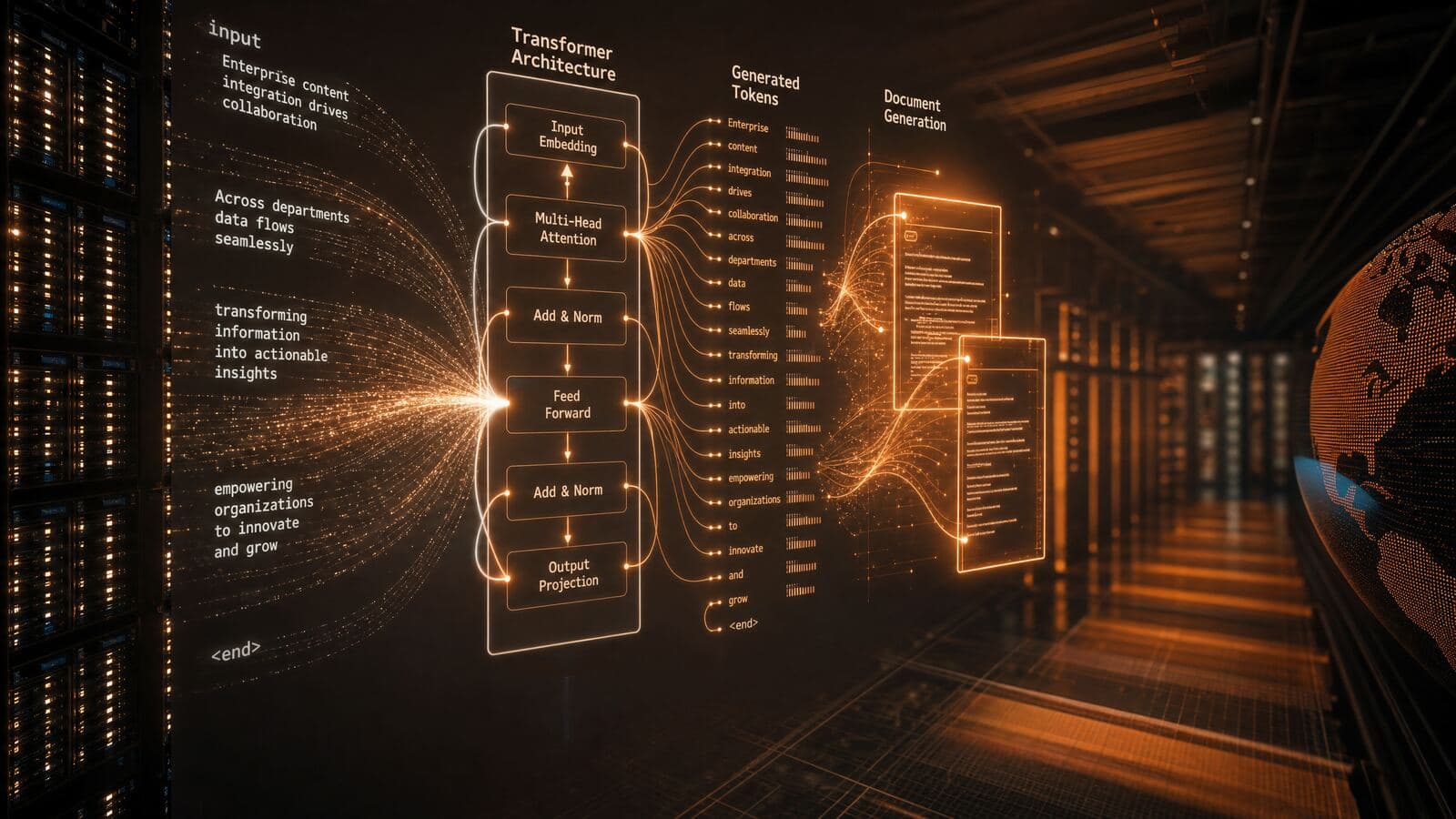
    Use a private language model trained around the knowledge your organisation actually uses, deployable inside your own environment, so teams get answers, extractions and comparisons in your language without sending sensitive information outside. NeoBram can train and adapt Small Language Models using approved company and industry knowledge.

    • Answers in your own terminology
    • Sensitive knowledge stays inside your environment
    • Extraction, classification, search and comparison
    • Trained on approved company knowledge
    Language model adapted to industrial technical documentation in a private environment

    Capability first. Model and vendor selection follow the data boundary, evaluation and operating responsibility.

    Direct answer

    NeoBram helps industrial organisations make their own technical knowledge available in seconds, in their own terminology, without sending sensitive information outside their environment. Behind that, NeoBram builds, fine-tunes and adapts Small Language Models (SLMs) and other domain-specific models using customer-approved material: technical documents, company knowledge, procedures, product documentation, historical data, Q&A and engineering information. NLP engineering covers information and entity extraction, text and document classification, semantic search, document comparison, summarization, knowledge extraction and multilingual processing where supported. Models can be deployed privately or offline where technically feasible. NeoBram does not own a universal pre-trained model for every industry; each model is adapted to the customer's environment, evaluated against representative cases and subject to the licence of its third-party base model.

    Industrial decision library

    Start from the decision, evidence and failure condition.

    Technical-document intelligence

    Decision
    Which requirement, specification value, clause or part attribute matters in this datasheet, tender or supplier document, and how does it compare with ours?
    Minimum useful evidence
    Representative documents across formats, languages and revisions, with engineering-approved extraction targets and comparison rules.
    Acceptance
    Field-level extraction precision and recall, comparison accuracy on a held-out set, reviewer correction time and preserved source references.
    Can fail when
    Layouts and units vary beyond the evidence, extracted language is treated as interpretation, or the source page is not retained for review.

    Domain-adapted assistant model for a private plant

    Decision
    Which language model can answer plant terminology, formats and procedures accurately inside an offline or on-premises boundary?
    Minimum useful evidence
    Approved procedures, manuals, glossaries, Q&A pairs and historical records, with content owners and permissions.
    Acceptance
    Domain test-set performance versus the base model, abstention on out-of-scope questions, latency on the target hardware and evaluation the customer can re-run.
    Can fail when
    Training material is uncontrolled or superseded, the adapter memorises confidential records, or the base-model licence forbids the intended deployment.

    Classification and routing of industrial records

    Decision
    Which deviation, maintenance note, supplier document or customer request belongs to which category, owner and workflow?
    Minimum useful evidence
    Historical records with approved labels, taxonomy definitions, edge cases and exception rules.
    Acceptance
    Accuracy by class, exception recall, routing correctness and human correction burden.
    Can fail when
    Labels encode past inconsistency, taxonomy changes are not versioned, or low-confidence records are auto-routed without review.

    Multilingual procedure and shift-log processing

    Decision
    Which observations, actions and open items in mixed-language logs and procedures need attention or translation?
    Minimum useful evidence
    Representative logs and procedures in each language, terminology lists and reviewer judgements.
    Acceptance
    Extraction and summary quality by language, preserved original text and reviewer acceptance.
    Can fail when
    Language coverage is assumed rather than tested, or summaries drop safety-relevant detail.

    Semantic search over engineering repositories

    Decision
    Which drawing, specification, standard or prior decision is relevant to this engineering question?
    Minimum useful evidence
    Repository metadata, revisions, permissions, document types and a set of real questions with expert-judged answers.
    Acceptance
    Source precision and recall by question class, permission enforcement and time to the right document.
    Can fail when
    Superseded revisions rank higher, cross-project permissions leak, or similarity is mistaken for applicability.

    Capability architecture

    Candidate components not a fixed product stack.

    Model, product and platform names may change. NeoBram selects capabilities from the intended use, representative evaluation, latency, privacy, licences, operating cost and customer support model.

    Corpus qualification and licensing

    Confirm which documents, records and Q&A may be used for adaptation, under which permissions and licences.

    Selection question: Is every training source approved, current and traceable to an owner?

    Adaptation method

    Choose between prompting, retrieval grounding, adapter fine-tuning, distillation or full fine-tuning based on the evidence and the deployment target.

    Selection question: Does the evaluation show the more expensive method is actually needed?

    Base model selection

    Select an open-weight or licensed base model by size, capability, hardware fit, language coverage and licence terms.

    Selection question: Can the model run inside the required boundary under a licence that permits the intended use and transfer?

    NLP pipeline

    Extraction, classification, entity recognition, comparison, summarization and search components with deterministic validation where possible.

    Selection question: Which steps need a probabilistic model and which are better served by rules?

    Evaluation and lifecycle

    Domain test sets, abstention and hallucination checks, versioning, monitoring, rollback and controlled retraining.

    Selection question: Can the customer's team re-run the evaluation and approve a model change without NeoBram?

    Any vendor or open-source name elsewhere on the site describes an integration context. It does not imply partnership, certification or guaranteed compatibility.

    Production acceptance

    Evaluate the full workflow.

    • Build a domain test set with the customer's experts before adaptation begins, and hold it out from training.
    • Compare the adapted model against the base model and against retrieval-only approaches on the same test set.
    • Measure extraction and classification at the unit the business reviews: field, clause, entity or record.
    • Test abstention on out-of-scope questions, confidential-content leakage and behaviour on superseded material.
    • Measure latency, memory and throughput on the actual target hardware, including offline or edge devices.
    • Regression-test after every corpus, adapter, prompt, base-model or permission change.

    Limitations

    Plan for failure and change.

    • NeoBram does not own a universal pre-trained model for every industry; adaptation is customer-specific.
    • Fine-tuning does not guarantee factual accuracy; grounding, evaluation and abstention remain necessary.
    • Third-party base models remain subject to their own licences, which may restrict deployment or transfer.
    • Fine-tuned adapters and customer-trained artefacts transfer only where contractual and licence terms allow.
    • Multilingual quality depends on the languages represented in the base model and the customer's evidence.

    Governance sources

    Use primary guidance as a design input.

    Sources do not certify a NeoBram implementation. They help teams ask better governance, risk and architecture questions.

    AI Risk Management Framework

    U.S. National Institute of Standards and Technology

    Primary framework for governing, mapping, measuring and managing AI risk across the lifecycle.

    Direct answers

    Questions to resolve before implementation.

    Should we fine-tune a small model or use RAG?+

    Start with retrieval grounding when the need is access to current controlled documents. Fine-tune when the model must learn terminology, formats, classification behaviour or a compact offline footprint that prompting cannot deliver. Many production systems combine a domain-adapted small model with retrieval.

    Can the model run fully offline or air-gapped?+

    Yes, where the selected base model, hardware and licences permit. Small models are well suited to plant servers and edge hardware. Offline operation still requires identity, logging, versioning, monitoring and a controlled route for model and content updates.

    Do we own the fine-tuned model?+

    Customer-specific artefacts such as adapters, prompts, evaluation sets, pipelines and configurations can be transferred where the contract and the base-model licence allow. The third-party base model itself remains under its own licence and is not automatically owned by the customer.

    How much data is needed for adaptation?+

    Less than most teams expect for adapter fine-tuning, but quality and approval matter more than volume. A few thousand well-labelled examples or a curated procedure corpus can be enough for a bounded task; the domain test set decides.

    Does NeoBram have a ready-made model for our industry?+

    No. NeoBram brings the engineering method, evaluation harness and reference pipelines, then adapts a suitable base model to your approved material and environment.

    Use one real workflow

    Define the evidence and acceptance test before the model.

    NeoBram can lead the AI engineering while your experts retain domain, quality, safety and operating authority.

    Plan the first project