Key takeaways
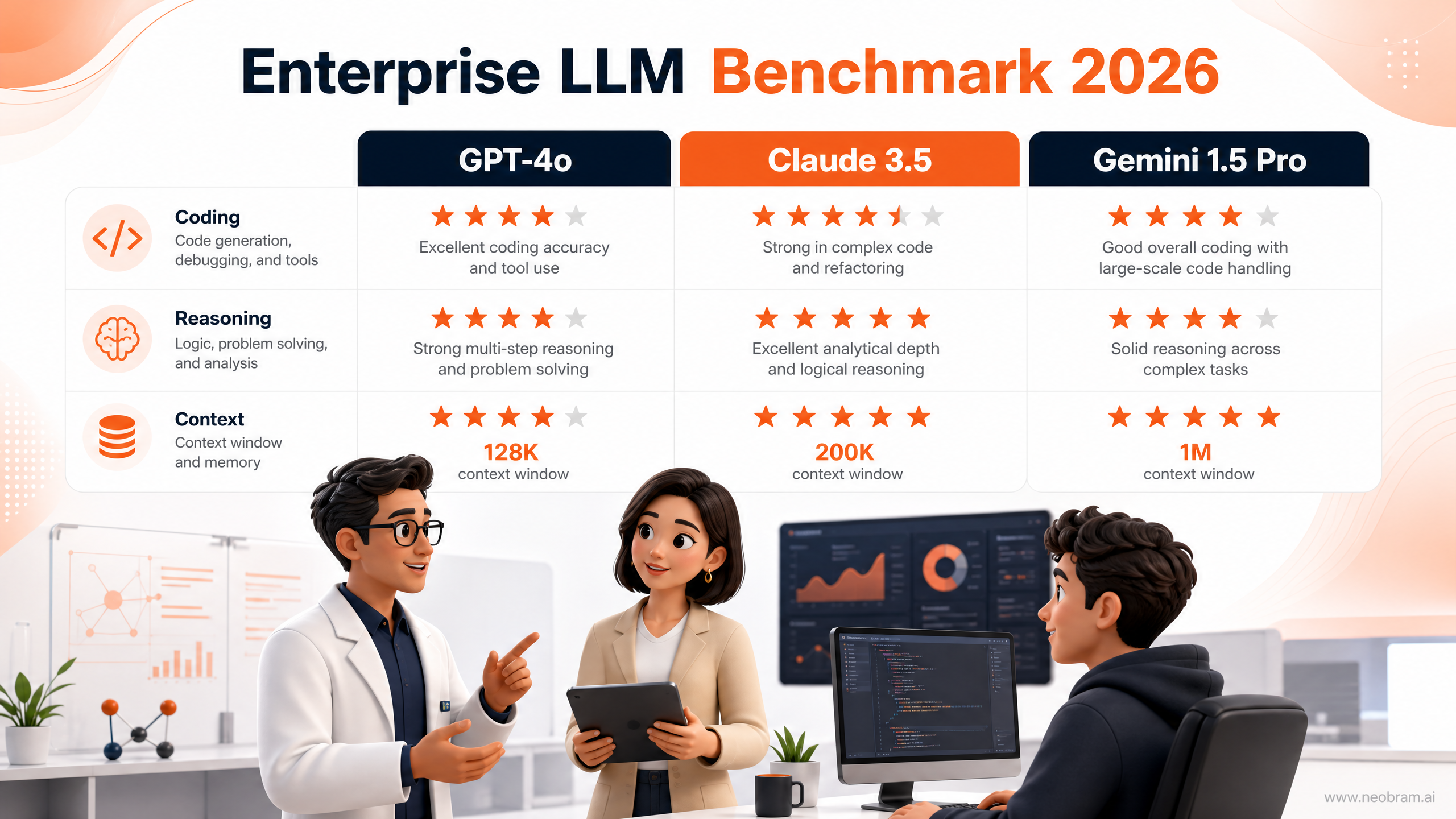
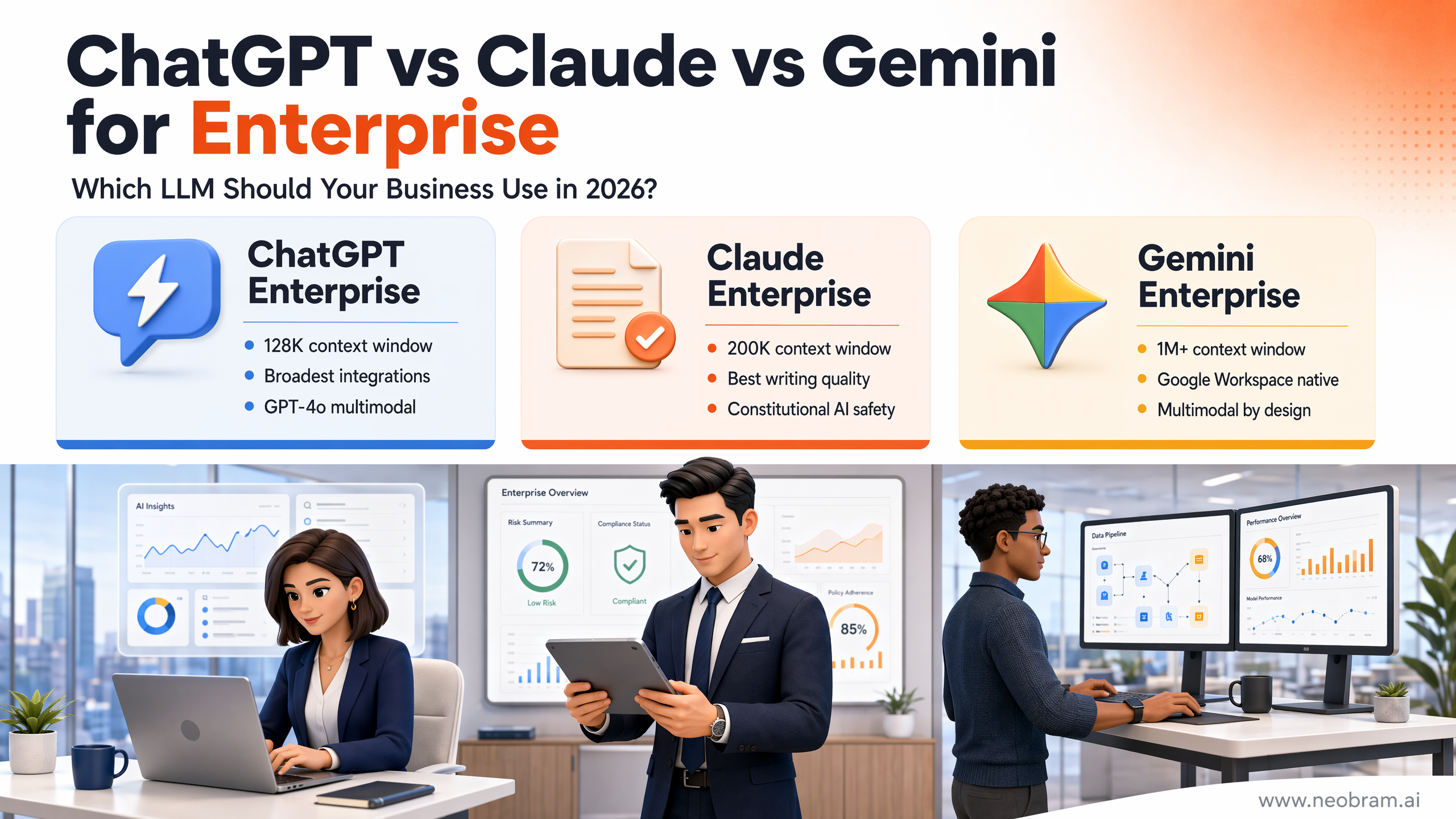
- ChatGPT Enterprise remains the most versatile platform, capturing roughly 81% of global chatbot traffic with strong capabilities in coding and reasoning.
- Claude Enterprise excels in writing quality and long-document processing, featuring a massive 200K token context window and strict adherence to instructions.
- Gemini Enterprise leverages a 1M+ token context window and native integration with Google Workspace, making it a powerhouse for research and synthesis.
- Enterprise AI pricing has shifted from simple per-seat models to complex structures involving usage metering, token limits, and API integration costs.
The Enterprise AI Landscape in 2026
Choosing the right large language model (LLM) for your business is no longer a simple decision. The enterprise AI market has matured significantly, and the leading platforms ChatGPT, Claude, and Gemini have each carved out distinct strengths and weaknesses. For IT leaders and business executives, picking the wrong platform can result in wasted resources, compromised data security, and lost workflow momentum.
This guide provides a comprehensive comparison of ChatGPT, Claude, and Gemini across the dimensions that matter most for enterprise use: writing quality, coding assistance, research capabilities, context windows, integrations, privacy, and pricing.
According to a 2025 survey of 100 CIOs by A16Z, 78% of Global 2000 companies use OpenAI models in production, while 81% of these firms now employ a multi-vendor strategy, utilizing three or more model families to balance capabilities and costs.
ChatGPT Enterprise: The Versatile Market Leader
OpenAI's ChatGPT remains the most recognized and widely adopted AI assistant in the corporate world. Its primary advantage is its versatility; it is highly capable across a broad spectrum of tasks, making it a strong default choice for many organizations.
Key Strengths
Broad Capabilities: ChatGPT handles text, images, audio, and code within a single interface. Built-in tools like web search, code interpreter, and DALL-E image generation make it a comprehensive platform that reduces the need for multiple separate tools.
Advanced Reasoning: OpenAI's o-series reasoning models are exceptionally strong for multi-step logical problems, scientific reasoning, and complex planning. When a task requires the model to think through a problem step-by-step, ChatGPT is highly competitive.
Customization: Businesses can build and deploy custom GPT configurations tailored to specific internal processes. While not full autonomous agents, these provide a useful middle ground for teams needing focused assistance without extensive technical setup.
Limitations
Instruction Adherence on Long Tasks: For highly detailed, multi-part prompts, ChatGPT can occasionally drift or miss constraints set earlier in the conversation. This can be problematic for precision work like legal or compliance documentation.
Output Consistency: The style and tone of outputs can vary between sessions, requiring businesses to invest more time in system prompting to maintain a consistent brand voice.
Claude Enterprise: The Specialist for Writing and Long Documents
Anthropic's Claude has built a formidable reputation among teams that prioritize writing quality, precise instruction following, and the ability to process massive documents. It is often considered the most reliable platform for complex, structured workflows.
Key Strengths
Superior Writing Quality: Claude consistently produces text with a natural cadence, excellent paragraph structure, and strong adherence to tone instructions. For marketing copy, policy documents, and long-form content, Claude is widely regarded as the top performer.
Massive Context Window: Claude Enterprise supports a context window of up to 500,000 tokens (and experimental forms with million-token contexts). This allows users to input entire books, complete codebases, or extensive legal contracts and receive coherent analysis across the entire dataset.
Strict Instruction Following: Claude tends to stay closely aligned with detailed system prompts and complex constraints across long conversations, making it ideal for structured business tasks.
Limitations
Fewer Native Integrations: Claude's built-in tool integrations are more limited compared to ChatGPT and Gemini. It lacks native image generation and direct integration with major workspace suites out of the box.
Multimodal Constraints: While Claude handles images well, it does not support audio input or native video processing as seamlessly as its competitors.
Claude Opus 4.6 achieved an industry-leading score of 65.4% on the Terminal-Bench 2.0 benchmark, highlighting its exceptional capability in coding and complex knowledge-work tasks.
Gemini Enterprise: The Research Powerhouse Built for Google Workspace
Google's Gemini brings a significant structural advantage to the table: deep integration within the Google ecosystem. For businesses already operating on Google Workspace, Gemini offers a seamless and powerful AI experience.
Key Strengths
Native Workspace Integration: Gemini is embedded directly into Gmail, Docs, Sheets, Slides, and Meet. Users can draft emails with thread context, summarize meetings, and build presentations without ever leaving their primary workflow tools.
Unmatched Context Window: Gemini 1.5 Pro and its successors support over 1 million tokens in context. This massive capacity has real-world implications for businesses dealing with extensive research repositories, large codebases, or lengthy legal documents.
Multimodal by Design: Built from the ground up to handle text, images, audio, and video simultaneously, Gemini excels in media-heavy workflows, content production, and complex market research.
Limitations
Writing Tone: While accurate, Gemini's writing can sometimes feel more functional than polished. Teams requiring nuanced, brand-aligned content often prefer Claude for final drafts.
Ecosystem Dependency: If your business does not run on Google Workspace, Gemini loses much of its structural advantage, as its integrations with non-Google tools are relatively thin.
Pricing and Data Privacy Considerations
Enterprise AI pricing is no longer just about the monthly cost per seat. The true cost is determined by how data is accessed, how usage is metered, and the level of integration required.
* ChatGPT Enterprise: Offers custom pricing with advanced security, administrative controls, and expanded context windows. OpenAI explicitly states that data from Enterprise and Business plans is not used to train their models.
* Claude Enterprise: Features custom pricing with centralized administration, identity integration, and configurable retention. Anthropic also ensures that customer prompts and responses are not used for model training by default.
* Gemini Enterprise: Bundled into Google Workspace Enterprise plans, altering the cost structure. Google confirms that customer data within Workspace is not used to train Gemini models.
Enterprise AI costs are increasingly driven by token usage. A token equals roughly four characters of text. Output tokens (text generated by the AI) typically cost more than input tokens (text provided to the AI), making capacity planning crucial for heavy workloads.
How NeoBram Can Help
Choosing the right LLM is only the first step; integrating it securely and effectively into your enterprise workflows is where the real challenge lies. NeoBram helps organizations navigate the complex AI landscape, ensuring that your chosen models align with your business goals, security requirements, and existing infrastructure.
Whether you need to deploy ChatGPT for versatile automation, integrate Claude for document-heavy analysis, or leverage Gemini within your Google Workspace, our team provides the expertise to maximize your AI investment.